Sunday, June 21, 2009

The Power of Berries


Studies show that many berries, including these Olallie blackberries, are packed with nutrients and may be a weapon against cancer. (David Karp for The New York Times)


Several studies show that people who eat diets high in fruits and vegetables have lower cancer rates. Now a large body of research suggests that berries may be among the most potent cancer-fighting fruits.

In numerous laboratory studies, researchers at Ohio State University have found that black raspberries inhibit the development of oral, esophageal and colon cancers in rats. Some human studies have also suggested a benefit from berry consumption. In one small study of patients with familial adenomatous polyposis, a genetic condition that raises risk for colon cancer, patients given black raspberry extract had up to 59 percent fewer rectal polyps than those taking a placebo; the findings were published in November’s Cancer Prevention Research journal. Another study showed black raspberry powder reduced symptoms for patients with Barrett’s esophagus, a precancerous condition.

The main berries being researched include black and red raspberries, blackberries, strawberries and elderberries. Although blueberries have numerous health benefits, they don’t appear to have the same cancer-fighting properties as other berries, researchers say. Berries contain a number of healthful compounds including vitamins A, C, E and folic acid; selenium; calcium; polyphenols; and compounds called anthocyanins, which give berries their color.

While berries, particularly raspberries, look like a promising super food, many people may not find it practical to eat them on a regular basis. A human would have to eat about a pound of berries a day to ingest the equivalent doses used in the rodent studies. Another concern is whether variations in climate and growing techniques may alter the concentration of the beneficial compounds found in the fruit. Although frozen berries can substitute for fresh when they are out of season, the fruits are expensive and may be too costly for most people to eat daily.

As a result, researchers are trying to identify the key ingredients that make berries cancer fighters. In a study published this month in Cancer Prevention Research, scientists compared rats who ingested a diet of whole black raspberries or a concentrated powder of black raspberry anthocyanins to rodents who ate a regular diet. The study found that the anthocyanin powder worked just as well as whole raspberries for slowing tumor growth. Both groups of rats consuming either whole berries or anthocyanin powder developed 50 percent fewer esophageal tumors compared to untreated rats.

“We’re quite encouraged by that,” said Gary D. Stoner, professor emeritus and former head of the Cancer Prevention Program at Ohio State University. “It’s not total inhibition, but it was pretty substantial. It tells us the anthoncyanins in the berries are pretty important and they are deserving of more research.”

Although the verdict on berries as cancer fighters is still out, Dr. Stoner says more people could benefit by eating them. Studies already show people with diets high in fruits and vegetables are healthier, and berries are a particularly tasty fruit. Dr. Stoner says frozen berries are a good option, because they won’t spoil, can be eaten year round and often are cheaper than fresh berries. Concentrated berry powders are also available at health food stores.

Dr. Stoner says he starts every morning with a shake made with strawberries, blackberries and blueberries mixed with yogurt and milk.

“We think for the average American, probably the consumption of three to four helpings of berries every week is a good thing,” he said. “We know berries have so many effects on processes related to cancer development. They are one of the food stuffs you probably should consider consuming every day, or at least a few times a week.”


Berries, Beans top "Best Antioxidant List"

Antioxidants fight damage to cells from rogue molecules called "free radicals." Experts believe this assault on cells may fuel killer diseases such as heart disease and cancer, and even aging itself.

The new Top 20 list, published in the June issue of the Journal of Agricultural and Food Chemistry, "is a relative ranking of the capacity of foods to interfere with or prevent oxidative processes and to scavenge free radicals," explained list co-creator Ronald L. Prior, a USDA nutritionist and research chemist based in Little Rock, Ark.

Their Top 20:

Small red beans (dried).
Wild blueberries.
Red Kidney beans.
Pinto beans.
Blueberries (cultivated).
Cranberries.
Artichokes (cooked).
Blackberries.
Prunes.
Raspberries.
Strawberries.
Red Delicious apples.
Granny Smith apples.
Pecans.
Sweet cherries.
Black plums.
Russet potatoes (cooked).
Black beans (dried).
Plums.
Gala apples.

Friday, June 19, 2009

Colonel's secret ingredient for KFC grilled chicken? Beef!


El Pollo Loco, the California-based restaurant chain, seems to take delight in pulling Colonel Sander's leg, and now it has called out KFC (or is it KGC? Grilled chicken complicates everything) over its use of beef products in the making of its new grilled chicken.

According to the Los Angeles Times, El Pollo Loco discovered that the new KFC grilled chicken is made with beef powder and rendered beef fat.

A spokesperson for KFC saw no problem with this, telling the paper, "Small amounts of beef flavors are commonly used in seasonings." The spokesperson said that the seasoning used on the new chicken product contains only 0.2% beef powder.

I checked out menus for McDonalds, Wendy's, Burger King, Taco Bell and Arby's. None of them list beef products in their chicken.


For the record, KFC Grilled Chicken is made of chicken, salt, sodium phosphate, MSG, maltodextrin, bleached wheat flower, partially hydrogenated soybean and cottonseed oil, spices, palm oil, natural flavor (?), garlic powder, Soy sauce, chicken fat, chicken broth, autolyzed yeast, beef powder, rendered beef fat, extractives of tumeric, dehydrated carrot, onion powder, calcium silicate, silicon dioxide. Just like Mom used to make, right?

Kudos to KFC for posting its ingredients, however. El Pollo Loco doesn't. So what does it have to hide?

KFC's mixture of meats presents a problem for me. I'm not a vegetarian, but I'm an aesthetic omnivore. I prefer to eat ugly animals whenever possible; chickens, pigs, crab or halibut. I try to avoid cute meat, such as beef (is there anything lovelier than the eyes of a Jersey cow?), lamb and rabbit.

Of course, many people choose to not eat beef for ethical or religious reasons, and for them, this is no laughing matter. The KFC spokesperson's assertion that beef powder is widely used strikes me as reasonable, and leaves me wondering how much I've eaten in my life. Or perhaps I don't want to know.

Thanks to The Consumerist

Friday, June 12, 2009

The World's Healthiest Foods


Of course, there are many other nutritious foods other than those that we have included on our list that we feel are wonderful, health-promoting foods; if there are other whole foods - such as fruits, vegetables, nuts/seeds, whole grains, etc - that you like, by all means enjoy them. Just because a food is not on our list doesn't mean that we don't think that it can be included in a diet geared towards the Healthiest Way of Eating as long as it is a whole, natural, nutrient-rich food.

To find out why some of your favorite nutritious foods are not included in our list, read The Criteria Used to Select the World's Healthiest Foods.


Vegetables
Asparagus
Avocados
Beets
Bell peppers
Broccoli
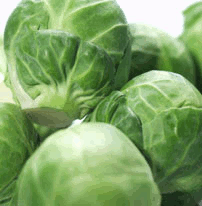
Brussels sprouts
Cabbage
Carrots
Cauliflower
Celery
Collard greens
Cucumbers
Eggplant
Fennel
Garlic
Green beans
Green peas
Kale
Leeks
Mushrooms, crimini
Mushrooms, shiitake
Mustard greens
Olives
Onions
Potatoes
Romaine lettuce
Sea vegetables
Spinach
Squash, summer
Squash, winter
Sweet potatoes
Swiss chard
Tomatoes
Turnip greens
Yams
Seafood
Cod
Halibut
Salmon
Scallops
Shrimp
Tuna
Fruits
Apples
Apricots
Bananas
Blueberries
Cantaloupe
Cranberries
Figs
Grapefruit
Grapes
Kiwifruit
Lemon/Limes
Oranges
Papaya
Pears
Pineapple
Plums
Prunes
Raisins
Raspberries
Strawberries
Watermelon
Eggs & Low-Fat Dairy
Cheese, low-fat
Eggs
Milk, 2%, cow's
Milk, goat
Yogurt
Beans & Legumes
Black beans
Dried peas
Garbanzo beans (chickpeas)
Kidney beans
Lentils
Lima beans
Miso
Navy beans
Pinto beans
Soybeans
Tempeh
Tofu
Poultry & Lean Meats
Beef, lean organic
Calf's liver
Chicken
Lamb
Turkey
Venison
Nuts & Seeds
Almonds
Cashews
Flaxseeds
Olive oil, extra virgin
Peanuts
Pumpkin seeds
Sesame seeds
Sunflower seeds
Walnuts
Grains
Barley
Brown rice
Buckwheat
Corn
Millet
Oats
Quinoa
Rye
Spelt
Whole wheat
Spices & Herbs
Basil
Black pepper
Cayenne pepper
Chili pepper, dried
Cilantro/Coriander seeds
Cinnamon, ground
Cloves
Cumin seeds
Dill
Ginger
Mustard seeds
Oregano
Parsley
Peppermint
Rosemary
Sage
Thyme
Turmeric
Natural Sweeteners
Blackstrap molasses
Cane juice
Honey
Maple syrup
Other
Green tea
Soy sauce (tamari)
Water


FAQs about the World's Healthiest Foods

Criteria for The World's Healthiest Foods

Among the thousands of different foods our world provides, the majority contain at least several of the nutrients our bodies need but to be included as one of the World's Healthiest Foods they had to meet the criteria listed below.

The criteria we used will also help you understand why some of your favorite (and also nutritious) foods may not be included on our list. For example, Readers have asked why pomegranate, a very nutritious food, is not included on our website. While pomegranates taste great and are rich in vitamins and flavonoid phytonutrients, they are still rather expensive which makes them not as widely available to many people.

1. The World's Healthiest Foods are the Most Nutrient Dense

The World's Healthiest Foods have been selected because they are among the richest sources of many of the essential nutrients needed for optimal health. We used a concept called nutrient density to determine which foods have the highest nutritional value.

Nutrient density is a measure of the amount of nutrients a food contains in comparison to the number of calories. A food is more nutrient dense when the level of nutrients is high in relationship to the number of calories the food contains. By eating the World's Healthiest Foods, you'll get all the essential nutrients that you need for excellent health, including vitamins, minerals, phytonutrients, essential fatty acids, fiber and more for the least number of calories. Read more about Our Food and Recipe Rating System.

2. The World's Healthiest Foods are Whole Foods

The World's Healthiest Foods are also whole foods complete with all their rich natural endowment of nutrients. They have not been highly processed nor do they contain synthetic, artificial or irradiated ingredients. And whenever possible, The Healthier Way of Eating recommends purchasing "Organically Grown" foods, since they not only promote your health, but also the health of our planet.

3. The World's Healthiest Foods are Familiar Foods


The World's Healthiest Foods are common "everyday" foods. These include the fruits, vegetables, whole grains, nuts and seeds, lean meats, fish, olive oil, herbs and spices that are familiar to most people.

4. The World's Healthiest Foods are Readily Available

Although there are many foods that are exceptionally nutritious, many of them are not readily available in different areas of the country. The World's Healthiest Foods are foods that the majority people can easily find at their local market.

5. The World's Healthiest Foods are Affordable


We have selected foods that are not only familiar and available, but also affordable, especially if you purchase them locally and in season. This is also the time when they are the freshest and of the best quality.

6. The World's Healthiest Foods Taste Good

The World's Healthiest Foods are also some of the world's best tasting foods. We have created recipes using the World's Healthiest Foods that do not overpower, but enhance, the unique flavor of each food. Each recipe provides a flavor adventure so you can discover new ways to experience and enjoy the great natural tastes of these foods.

Monday, June 1, 2009

Squat exercise dog

Hey everyone,

well i was browsing the internet. Unbelievable what you can find. But this one I had to post. It was too cute and motivating. You know the dog is the Man's best friend but like that? Working out with you? Check out the video, you will love it.

Everyone needs a work out partner!

http://www.liveleak.com/view?i=4a3_1243135393&p=1

Thursday, May 28, 2009

Know what you are eating


McDonald’s

The egg’s reputation is recovering, but scrambled eggs as a part of McDonald’s breakfast include much more than egg. Their pasteurized whole eggs have sodium acid pyrophosphate, citric acid, and monosodium phosphate (all added to preserve color), and nisin, a preservative. To top it off, the eggs are prepared with liquid margarine: liquid soybean oil, water, partially hydrogenated cottonseed and soybean oils (trans fats), salt, hydrogenated cottonseed oil (trans fat), soy lecithin, mono- and diglycerides, sodium benzoate, potassium sorbate (preservatives), artificial flavor, citric acid, vitamin A palmitate, and beta carotene (color). Though not all bad, these added chemicals may be the reason why homemade scrambled eggs taste so much better than McDonald’s.

For coffee drinkers, it would seem fairly safe to just grab a quick cup of coffee at McDonalds on the way to work. But many health conscious people would object to it also including this list of ingredients: sodium phosphate, sodium polyphosphate, Di-Acetyl Tartrate Ester of Monoglyceride, sodium stearoyl lactylate, tetra sodium pyrophosphate, sodium hexametaphosphate, sodium citrate, and carrageenan. Do health nuts still drink coffee?

Salads can usually be counted on to be a “what you see is what you get” item. But McDonald’s adds some interesting ingredients. The salads with grilled chicken also have liquid margarine.

Several salads have either cilantro lime glaze, or orange glaze added. Along with many of McDonald’s sauces, both the cilantro lime glaze and the orange glaze contain propylene glycol alginate. While propylene glycol is considered "GRAS" for human consumption, it is not legal for use in cat food because the safety hasn't been proven yet [10]. Proplene glycol is also used "As the killing and preserving agent in pitfall traps, usually used to capture ground beetles" [10].

The chili lime tortilla strips that are included in the southwest salads have several ingredients used to hide MSG. They also contain two ingredients that advertise the presence of MSG: disodium inosinate, and disodium guanylate.

The chicken has sodium phosphates (of an unspecified variety). It could be trisodium phosphate (a cleanser), monosodium phosphate (a laxative), or disodium hydrogen phosphate [11]. Why would McDonald’s add sodium phosphates (a foaming agent), and dimethylpolysiloxane added as an antifoaming agent in their crispy chicken breast filets? It isn’t dishwasher detergent.

Wednesday, November 19, 2008

The Decision to Be Remarkable

re•mark•able [adjective]: worthy of being noticed, especially as being uncommon or extraordinary

If you want to break out of the mold of average, the first thing you need to do is to make a decision to be radically different. Most remarkable people are people of action, and for a good reason: if you don’t take decisive action, nothing will ever change. But this first step is entirely mental. It calls for a clear decision to rise above the culture of mediocrity.

And then, of course, it does call for action.

How do you decide to be remarkable?

1. Stop making excuses. Just stop. No one wants to hear why you couldn’t do something, so make a conscious decision to stop talking about it.

2. Take responsibility. This is the opposite of giving excuses. Take responsibility for your own success, and take responsibility for the success of projects you work on. When something goes wrong (it usually does), take responsibility for that too.

3. Start questioning rules and expectations. Always ask questions and pay close attention to the answers you hear back. Some good starting questions are: Why is this rule in place? Who benefits from this rule being followed? What are the consequences if I don’t follow this rule or meet this expectation? What is the worst thing that could happen if I don’t follow this rule?

4. Find work that you love and do it well. Depending on who you are, this requires up to two big changes in your life: first, you have to find work that you love, and second, you have to do it well. Do it better than expected and people will be amazed.

5. Begin living your own life. This is what it’s all about—the life you were meant to live. If you don’t know what that is yet, start looking for it. Why would you want to live someone else’s life?

6. Take it up a level. Take what’s already working well and exponentially add to it. Grow your business 300%. Apply for the position of CFO when you’re the Accounts Payable Clerk. Visit five countries instead of one on your next trip (or if you want to explore one place well, stay three weeks instead of one).

Beware of Excellence

But watch out: being remarkable is addicting. It’s like regular exercise or healthy eating. When you first start a new exercise routine or diet, the adjustment is hard for a while. But after about 3-6 months of following it consistently, you build up a natural addiction to it.

Once you get used to regular exercise, you’ll feel bad when you’re not doing it. The same is true with being remarkable: do it once, and it’s scary. Do it a few times, and you love it. Stop doing it, and you’ll get depressed.

Many remarkable people deal with depression and anxiety all the time because they see the world differently than average people do. Their own failures and perceived failures are magnified. When others say, “Don’t worry about it,” they can’t understand why someone would think something like that. For this reason, a lot of geniuses throughout history have been chronically depressed.

Those are the hard things—and you also have to think about the critics, the skeptics, and the competition. We’ll come to those later. On the other hand, there are some great benefits to being remarkable:

HELP FROM A COMMUNITY


As you proceed with your plans for world domination, or whatever you want to do, you’ll be naturally drawn to others who have made the same decisions to be different. Even better, they’ll be drawn to you. You’ll learn from them and vice versa.

Whether you live in the Dilbert Cube, the Ivory Tower, the public sector, or are out there on your own somewhere, there are lots of ways to be remarkable. The specific application is up to you, and when you choose to make your own way, other people who “get it” will seek you out.

Remarkable people are all minorities in a world of average living.

HELP FROM THE UNIVERSE

You’ll find help in all kinds of unexpected places and from people you never knew before. No one really knows how this works, practically speaking. It’s okay; just accept the gifts that are given to you. They are given for a reason.

WHAT GOES UP STAYS UP

Instead of shrinking over time, your vision will actually get bigger. The funny thing about big goals is that they often take less time to achieve than you expect, and once you achieve them, you’ve already mentally moved on to bigger and better goals. As you proceed with questioning authority, building your army, achieving your goals, and helping others, the vision keeps expanding.

This is why it is not much more difficult to grow a business from $1,000 a month in sales to $10,000. The challenge is in getting that first $1,000 together.

This is why artists scrape together a meager living for an average of seven years before being noticed. Most of them drop out along the way, but for those who stick with it, all of sudden they’re selling paintings for $8 a square inch. (And by the way, art that sells for $10,000 isn’t always better than $100 art hanging in the coffee shop.)

This is your personal tipping point—not when everyone else starts adopting a new trend and makes it mainstream, but when everything comes together for your own vision. But you have to get in the game first, and you can do that by being remarkable.

***

Of all the steps required to change the world in the way you see fit, the decision to be remarkable is the most important. With this decision in place, other variables can be changed. Don’t rush this—it’s a big commitment.

Once you make the commitment, you need a vision to change the world. What will it be? Whatever you choose, make sure it’s remarkable enough to suit every gift you have ever been given. Once you decide to defy the expectations of being average, there will be a lot riding on your ultimate success.

View original source

Monday, October 13, 2008

8 Reasons Why People Drink Soda & 16 Reasons To Give Up Soda Drinking

1. It's Very Tasty!

The taste could be one thing that gets us addicted to drinking soda, it is delicious. In fact, it is so good, that many people drink it with every meal!

2. It's Everywhere!

Even if you wanted to drink something else, you would be hard-pressed to find it as prominently displayed in vending machines, at fast-food chains, and supermarket checkouts. You might not realize how ubiquitous Coke, Pepsi, and the like are in our society until you try to stop drinking soda.

3. Convenience, "Grab-n-Go"!

The most addictive thing about soda is the convenience. If you want something quick or are in a hurry, it is so easy to grab and convenient to drink.

4. Promotion and Advertising

Soft drinks are heavily consumed in part because companies promote them vigorously - Billions of dollars are spend on advertising sodas - and market them everywhere - in stores, restaurants, gas stations, museums, and even schools.

5. Soda Habit

For some people, drinking several sodas a day is a force of habit. You know drinking soda is a habit when you find yourself going to the grocery store at 10 p.m. because your refrigerator is tapped out.

6. It Is Cheap

Soda may be pretty inexpensive when compared with fruit juice and milk. With combo meals, a large soda is only an extra dollar, and you get fries!

7. Thirst

Often people drink soda to quench the thirst. However, this is probably the worst time to drink soda, because when you are very thirsty or dehydrated you have low levels of saliva. And saliva helps to neutralize acids (soda is the most acidic beverage you can buy) and wash your teeth clean.

8. Caffeine Addiction

Many soft drinks contain caffeine and caffeine is mildly addictive. This fact is part of the reason soda is such a hard habit to break. If you're addicted to the caffeine in soda, you're really having two habits - the soda habit and the caffeine habit.

16 Reasons To Stop Drinking Soda

These were reasons why we drink soda and here are 16 powerful reasons to give up soda drinking.

Do you know the extent to which drinking carbonated, caffeinated, sugared, or artificially sweetened beverages harms your body? Giving up soft drinks can be one of the best things you can do to improve your health.

1.Soda Is Useless.

First of all, there are no nutritionally beneficial components in soft drinks. Soft drinks mostly consist of filtered water and refined sugars. Yet the average American drinks about 57 gallons of soft drinks each year.

2. Weight Gain & Obesity

Many people either forget or don't realize how many extra calories they consume in what they drink. Drinking a single 330 ml can a day of sugary drinks translates to more than 1lb of weight gain every month.

Several scientific studies have provided experimental evidence that soft drinks are directly related to weight gain. The relationship between soft drink consumption and body weight is so strong that researchers2 calculate that for each additional soda consumed, the risk of obesity increases 1.6 times.

According to the results of high quality study3 reducing consumption of sugar-sweetened beverages helped reduce body mass index in the heaviest teenagers.

3. Diabetes

This is a consequence of #2. Anything that promotes weight gain increases the risk of diabetes. Drinking soda not only contributes to making people fat, but it also stresses the body's ability to process sugar5. Some scientists now suspect that the sweet stuff may help explain why the number of Americans with type 2 diabetes has tripled from 6.6 million in 1980 to 20.8 million today.

Rapidly absorbed carbohydrates like high fructose corn syrup put more strain on insulin-producing cells than other foods. When sugar enters the bloodstream quickly, the pancreas has to secrete large amounts of insulin for the body to process it. Some scientists believe that the unceasing demands that a soda habit places on the pancreas may ultimately leave it unable to keep up with the body's need for insulin. Also, insulin itself becomes less effective at processing sugar; both conditions contribute to the risk of developing diabetes.

Researchers from Brigham and Women's Hospital in Boston and Harvard Medical School4 analyzed data from the Nurses' Health Study II, a trial tracking the health of more than 51,000 women. None of the participants had diabetes at the onset of the study in 1991. Over the following 8 years, 741 women were diagnosed with the disease. Researchers found that women who drank one or more sugary drinks a day gained more weight and were 83% more likely to develop type 2 diabetes than those who imbibed less than once a month.

4. Weakened Bones And Risk Of Osteoporosis

Frequent consumption of soft drinks may also increase the risk of osteoporosis,6 especially in people who drink soft drinks instead of calcium-rich milk7. High soda consumption (particularly cola15) in children poses a significant risk factor for impaired calcification of growing bones.

In the 1950s, children drank 3 cups of milk for every 1 cup of sugary drinks. Today that ratio is reversed: 3 cups of sugary drinks for every cup of milk. Tellingly, osteoporosis is a major health threat for 44 million Americans. Most experts now say that the real culprit is soda's displacement of milk in the diet, though some scientists believe that the acidity of colas may be weakening bones by promoting the loss of calcium.

5. Dental Caries And Erosion

Soda eats up and dissolves the tooth enamel8. Researches9 say that soft drinks are responsible for doubling or tripling the incidence of tooth decay.

The acidity can dissolve the mineral content of the enamel, making the teeth weaker, more sensitive, and more susceptible to decay. Soda's acidity makes it even worse for teeth than the solid sugar found in candy.

Dental experts continue to urge that people drink less soda pop, especially between meals, to prevent tooth decay and dental erosion.

6. Kidney Damage

There is good evidence that cola beverages can increase the risk of kidney problems, more so than non-cola sodas.

Researches clearly demonstrated that large quantities of cola result in enhanced kidney stone formation16-17. If you're wondering exactly how soft drinks cause kidney stones, it's because of their acidity and radical mineral imbalances. Your body must buffer the acidity of soft drinks with calcium from your own bones. As this calcium is eliminated through your urine, it slowly forms kidney stones.

In a study published in the journal Epidemiology14, the team compared the dietary habits of 465 people with chronic kidney disease and 467 healthy people. After controlling for various factors, the team found that drinking two or more colas a day (whether artificially sweetened or regular) was linked to a twofold risk of chronic kidney disease.

7.Increased Blood Pressure

Experts have reasons to believe that overconsumption of fructose, particularly in the form of soft drinks, leads to an increase in blood pressure22.

8. Likely To Cause Heartburn

Soft drink consumption is a strong predictor of heartburn20-21.

9. Metabolic Syndrome Risk Factor

Soft drink consumption is a significant risk factor for developing of metabolic syndrome18, a combination of the symptoms such as high blood pressure, obesity, high cholesterol, and insulin resistance.

10. Harmful Effects On Liver

There is evidence that consumption of too many soft drinks puts you under increased risk for liver cirrhosis similar to what chronic alcoholics have19.

11. Impaired Digestive System

Soda, no matter who makes it, is the most acidic beverage you can buy, with a pH of about 2.51, about the same as vinegar, but the sugar content disguises the acidity. To put that into perspective, consider that battery acid has a pH of 1 and pure water has a pH level of 7.

Why does that matter? Throughout the digestive system, that starts from the mouth and ends up at the anus only the stomach can resist an acidic environment up to pH 2.0. But before the acidity of soft drink reaches the stomach it passes through all the other organs involved in the digestive system thus causing an abnormal acidic environment. The linings of the mouth, pharynx and esophagus are highly sensitive to acids.

The phosphoric acid present in soft drink competes with the hydrochloric acid of the stomach and affects its functions. When the stomach becomes ineffective, food remains undigested causing indigestion, gassiness or bloating (swelling of stomach).

12. Dehydration

Another problem with sodas is that they act as dehydrating diuretics. Both caffeine and sugar cause dehydration.

Caffeine is a diuretic and causes an increase in urine volume. High concentration of sugar is drawing off water because your kidneys try to expel the excess sugar out of the blood. When you drink a caffeinated soda to quench your thirst, you will actually become thirstier.

13. High Caffeine Content

Another advantage of avoiding sodas is that you will avoid the unnecessary caffeine. Soda drinks are a major source of caffeine in the American diet.

High doses of caffeine can cause irritability, restlessness, tension, insomnia, high blood pressure, gastrointestinal disturbance, excessive urination, irregular heartbeat and other side effects.

14. Toxins - Aspartame

If you think diet soda is better think again. The poison in diet soda is an artificial sweetener aspartame. Aspartame is made up of three chemicals: aspartic acid, phenylalanine, and methanol. It is used because it's about 200 times sweeter than table sugar.

Despite US FDA approval as a "safe" food additive, aspartame is one of the most dangerous substances added to foods. After you drink an aspartame-sweetened product, aspartame breaks down into its starting components: phenylalanine, aspartic acid, and methanol (that further converts to formaldehyde and formic acid, which are known carcinogens.). There are over 92 different health side effects associated with aspartame consumption10-13.

15. Possible Cell Damage Ability

A new health scare erupted over soft drinks recently amid evidence that they may cause serious cell damage. Research from a British university suggests a common preservative E211, known as sodium benzoate, found in drinks such as Fanta and Pepsi Max has the ability to switch off vital parts of DNA.

Sodium benzoate occurs in small amounts naturally in berries, but is used in large quantities to prevent mould in soft drinks.

16. There Are So Many Healthy Alternatives!

Soda replaces healthier drinks. By drinking soda, you cut the intake of fresh juices, milk, and even water and deprive yourself from essential vitamins and minerals.

* Water. Water is the best drink in the world.
* Tea. Any kind of tea - herbal, green or black - is rich in antioxidants, which were shown to protects the body form many health problems.
* 100% Juice. Fruit juice can be also useful for flavoring your water and teas.